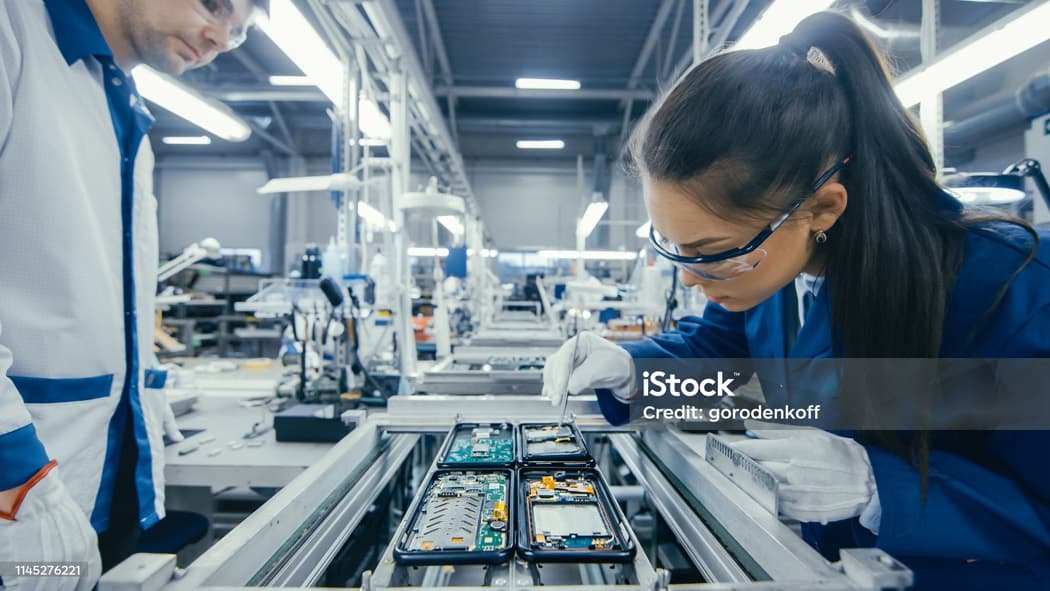
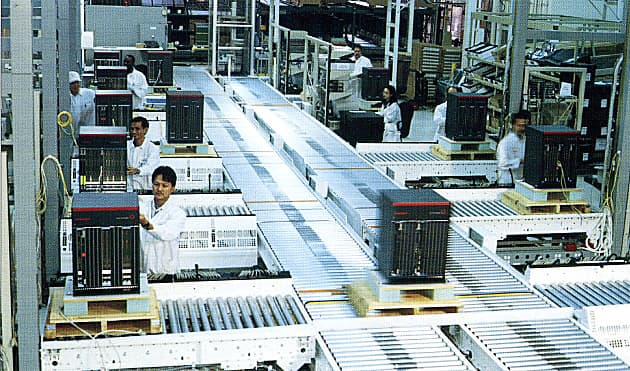
Electronics assembly demands material handling that can be trusted with components measured in millimeters, static-sensitive devices worth thousands of dollars per tray, and first-pass yield targets that leave no room for handling-induced defects. Our ESD-safe conveyors, precision indexing systems, and automated component feeders are engineered specifically for these conditions.
From SMEMA-compatible board handling that links SMT lines to downstream test and inspection stations, to cleanroom-compatible transport systems for medical device manufacturing, FloStor designs electronics assembly material handling that integrates cleanly with your existing equipment and MES platforms.
Electrostatic discharge destroys sensitive components invisibly — devices pass initial test but fail in the field, generating costly warranty returns and damaging customer relationships before the root cause is traced back to handling equipment that lacked proper ESD-safe grounding.
Manual transfer between SMT placement, reflow, inspection, and final assembly introduces queuing delays, staging damage, and process variability that prevents production lines from reaching designed cycle times and throughput targets.
Without per-unit build records linking components and process parameters to individual assemblies, a component failure forces broad product recalls instead of targeted lot withdrawals — exponentially increasing recall cost and customer impact.
Conventional industrial conveyors shed particles, use lubricants incompatible with cleanroom environments, and lack the outgassing controls required for optical, medical device, or semiconductor-adjacent assembly operations.
ESD-safe material handling starts with properly grounded conductive or dissipative conveyor materials — typically carbon-filled polymers or stainless steel — combined with grounded operator workstations, ESD-safe storage, and continuous monitoring to verify the ground path is intact. Every element that touches a sensitive component must be part of the ESD control program.
Precision indexing systems use servo-driven positioning to locate boards or carriers within ±0.1mm repeatability, enabling automated test fixtures and inspection systems to operate without the positioning errors that cause false failures. SMEMA-compatible interface boards allow seamless communication between equipment from different vendors.
For cleanroom environments, FloStor specifies sealed bearing units, NSF-approved lubricants, brushless motors, and materials with validated outgassing profiles to maintain ISO Class 5–8 cleanliness. Systems are validated to the applicable cleanliness standard and documented for customer and regulatory audits.
Conductive and dissipative handling systems engineered to protect sensitive electronic components from electrostatic discharge throughout the assembly process.
Specialized conveyor technologies optimized for transporting delicate electronic components with precise positioning, SMEMA compatibility, and gentle handling profiles.
Automated feeding and handling systems that precisely manage and position components from tape, tube, tray, and bulk packaging formats without ESD risk.
Integrated systems for automated testing and visual inspection that ensure quality and identify defects early — before costly downstream assembly steps are completed.
Custom-designed ESD-safe assembly workstations that enhance productivity and quality through ergonomic design, precise parts presentation, and integrated error-proofing.
Integrated tracking solutions that provide complete component and assembly traceability throughout the manufacturing process, supporting serialization and MES integration.
We analyze your product requirements, manufacturing processes, ESD sensitivity levels, and quality standards to identify the highest-value improvement opportunities.
Our engineers develop custom ESD-safe handling and automation solutions optimized for your specific electronics assembly environment and cycle time targets.
We build and test prototypes to verify positioning accuracy, ESD performance, integration with existing equipment, and handling compliance before full deployment.
Our team manages installation, SMEMA line integration, and commissioning with minimal disruption to ongoing production schedules.
Hands-on training for operators and maintenance personnel covers ESD handling protocols, system operation, cleaning procedures, and routine preventive maintenance.
Responsive technical support, preventive maintenance programs, and documentation updates keep your assembly systems performing at specification.
Reduction in ESD-related defect rates
Increase in production throughput
Reduction in manual handling steps
First-pass yield improvement target
* Based on typical client implementations in electronics manufacturing environments
Our electronics assembly specialists will evaluate your current handling systems, identify ESD risks and throughput constraints, and recommend solutions that improve yield and production efficiency.
Request an Assembly Line AssessmentContact our electronics assembly specialists to discuss how our material handling and automation solutions can improve your production quality and first-pass yield.
 FloStor