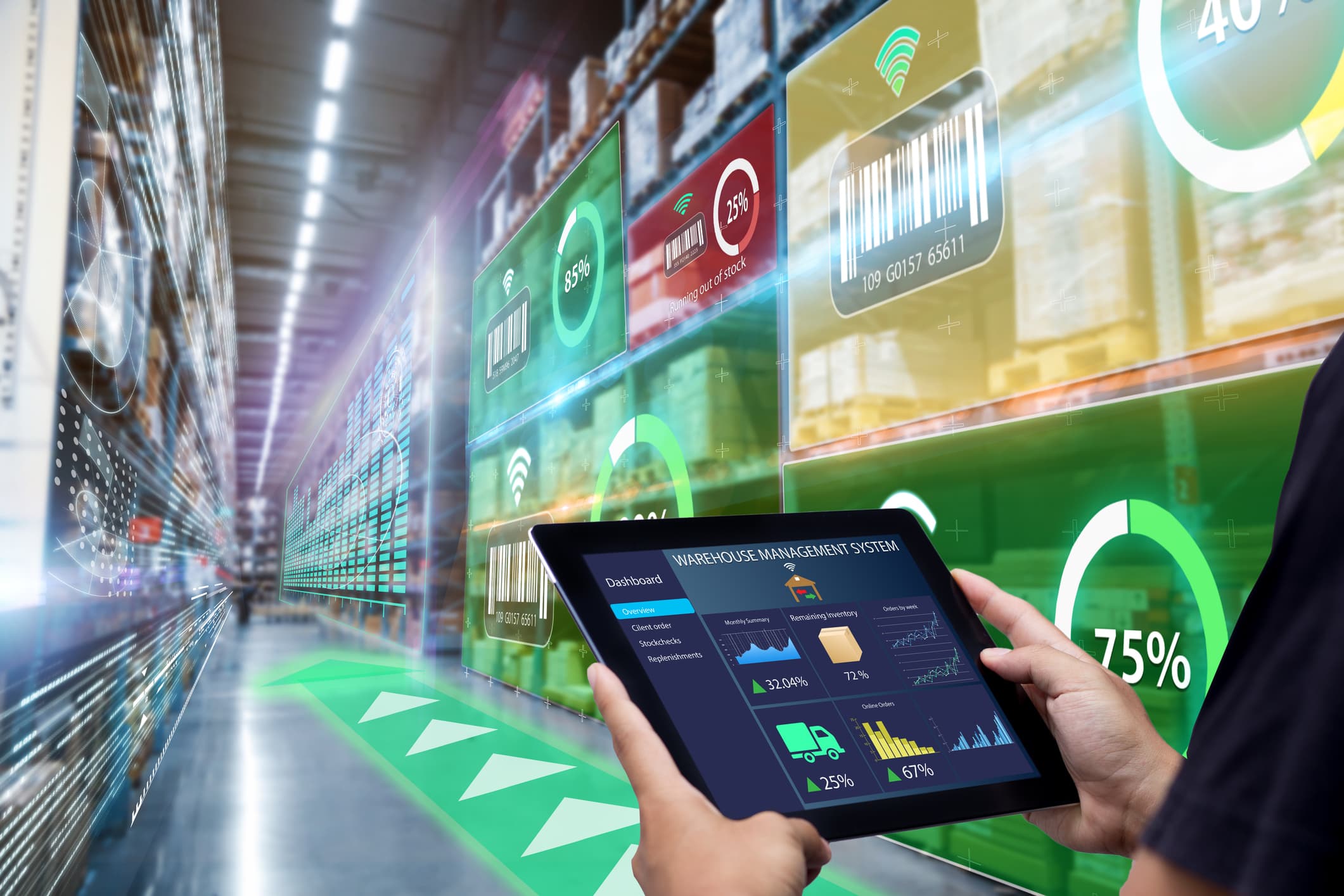
Your Warehouse Control System (WCS) is the software brain that orchestrates operations in real-time—managing traffic flow, optimizing routes, handling exceptions, and coordinating the handoffs between your WMS and physical equipment.
Our WCS solutions provide the intelligent software layer that transforms data into action: real-time workflow optimization, dynamic load balancing, predictive exception handling, and comprehensive visibility dashboards. We integrate seamlessly with your existing WMS and ERP systems to create a unified operational intelligence platform.

Monitor inventory levels and locations in real-time with precise tracking capabilities.
Optimize pick routes, replenishment tasks, and resource allocation automatically.
Connect with ERP, WMS, and other business systems for comprehensive data flow.
Gain actionable insights through comprehensive metrics and customizable reporting.
Directly manage conveyors, sorters, and automated systems from a single interface.
Expand and adapt your system as your business grows without major overhauls.
Equipment systems operate in silos—conveyors, sorters, and robots aren't coordinated, causing traffic jams and idle time.
Your WMS issues orders but can't direct real-time equipment decisions, leaving operators guessing at the floor level.
When a conveyor jams or sorter backs up, there's no system to reroute automatically—you lose hours diagnosing and recovering.
You have no single dashboard showing real-time throughput, bottlenecks, and equipment status across the entire facility.
A Warehouse Control System (WCS) sits between your WMS and your physical equipment—translating high-level order instructions into real-time machine commands. While the WMS decides what to pick and ship, the WCS decides how the equipment executes it: routing cartons, managing conveyor speeds, directing sorters, and coordinating AGVs and robots.
Think of it as an air traffic control system for your warehouse floor. It monitors every piece of equipment simultaneously, detects emerging bottlenecks, and re-routes work to keep throughput flowing. When a sorter lane fills up or a conveyor stops, the WCS automatically diverts product and alerts staff—minimizing downtime without manual intervention.
Modern WCS platforms also feed performance data back to the WMS and ERP, creating a closed loop of operational intelligence. The result: every system from receiving conveyors to shipping sorters runs as a coordinated whole rather than a collection of independent machines.

A WCS makes sense when you have:
A WCS may not be the priority if:
Comprehensive evaluation of your current operations, challenges, and objectives
Custom architecture tailored to your specific requirements and integration points
Phased deployment with minimal disruption to ongoing operations
Rigorous quality assurance and performance testing before go-live
Comprehensive staff training and knowledge transfer for system administrators
Continuous assistance, updates, and system optimization post-implementation
Not sure whether a WCS or an upgraded WMS would solve your coordination challenges?
Talk to a WCS SpecialistContact our warehouse control experts for a consultation and personalized demonstration.
 FloStor